Is a Standing Seam Metal Roof Worth It in Utah County?
By Utah County Roofing Pros · September 24, 2026
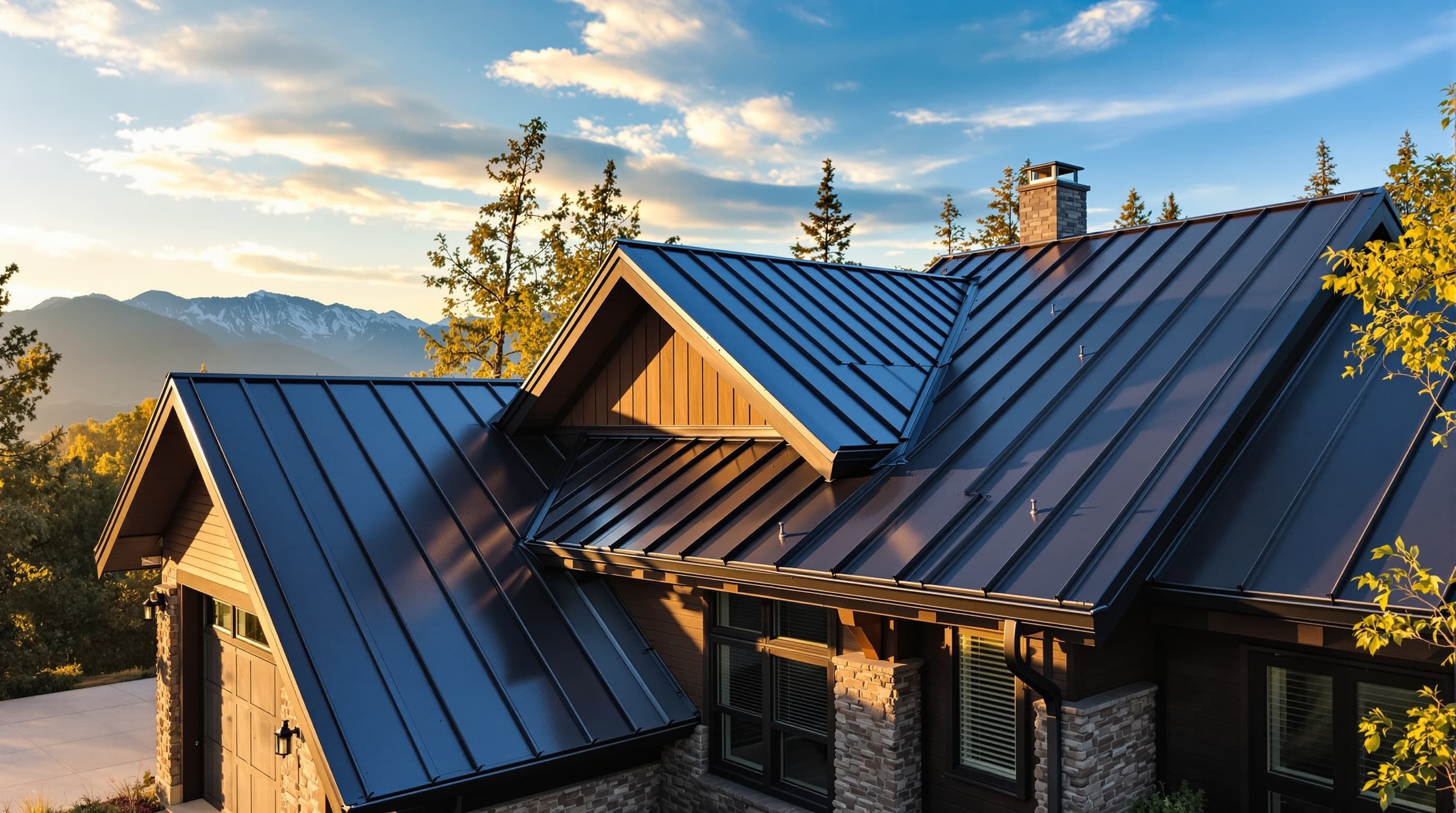
A standing seam metal roof costs more up front than shingles. It can also outlast two shingle roofs. Whether it is worth it depends on how long you plan to stay and what your roof has to handle.
Utah County gives a roof plenty to handle. Winters bring heavy snow, especially on the benches. Hail storms roll through in spring and summer. This guide covers the costs, the trade-offs and the homes where standing seam makes the most sense.
What a standing seam metal roof is
A standing seam roof is made of long metal panels that run from the ridge down to the eave. The seams between the panels stand up above the flat surface. The fasteners sit under those raised seams, out of the weather.
That hidden-fastener design is the main difference from exposed fastener metal roofing. Exposed screws go through the face of the panel. Their rubber washers wear out over time and can leak. Standing seam avoids that weak point.
What a standing seam metal roof costs
Standing seam is one of the most expensive residential roofing options. National cost guides commonly put it at roughly $10 to $20 per square foot installed. Architectural shingles often cost a third to half as much.
The price depends on the panel material and its thickness. The pitch and shape of the roof matter too. Valleys, dormers and skylights all add labor.
Treat these numbers as typical ranges, not a quote. Only a written estimate after an inspection gives you a real number. Our guide to what a new roof costs in Utah County compares metal and asphalt in more detail.
How long a standing seam roof lasts
A well-installed standing seam roof commonly lasts 40 to 70 years. Asphalt shingles typically last about 15 to 30 years. Strong sun at Utah County's elevation can wear shingles out faster.
That is the core of the math. If you plan to stay 20 years or more, one metal roof may take the place of a shingle roof and part of the next one. If you plan to move in five years, you may not get that value back.
How standing seam handles Utah County snow
Metal sheds snow more easily than shingles. Once the snow starts to melt, the smooth panels let it slide off. That can take weight off the roof during a heavy winter.
Sliding snow needs a plan, though. A roof full of snow can let go all at once. Snow guards keep it in place above doors and walkways. They also protect decks and driveways.
Metal can help with ice dams because snow clears sooner. Good attic insulation and ventilation still matter most.
How standing seam holds up to hail
Hail is the bigger worry for many Utah County homeowners. Metal panels resist punctures well. Large hail can still leave dents.
Dents are usually cosmetic, but they can be hard to fix without replacing a panel. Many metal panels carry a Class 4 impact rating under UL 2218, the highest rating for hail. Ask for the rating in writing.
Check your insurance policy too. Some policies treat cosmetic dents on metal differently from damage that causes leaks. If a storm has already hit, see what to do after hail damage.
Standing seam vs. asphalt shingles
Here is how the two compare on the points that matter most:
- Up-front cost favors shingles by a wide margin.
- Lifespan favors metal, often by decades.
- Snow sheds much more easily off metal.
- Hail can dent metal, while shingles can crack or lose granules.
- Repairs are simpler and cheaper on shingles.
For a longer side-by-side, see our guide to asphalt vs metal roofing in Utah.
When a standing seam metal roof is worth it
Standing seam makes the most sense when:
- You plan to stay in the home for 20 years or more.
- Your roof has long, simple planes.
- Your home sits on a bench or another spot that gets heavy snow.
- You want a roof you rarely have to think about.
It is harder to justify when:
- You plan to sell within a few years.
- The roof has many valleys, dormers and skylights.
- The budget is tight and the current roof needs replacing now.
Standing seam and solar panels
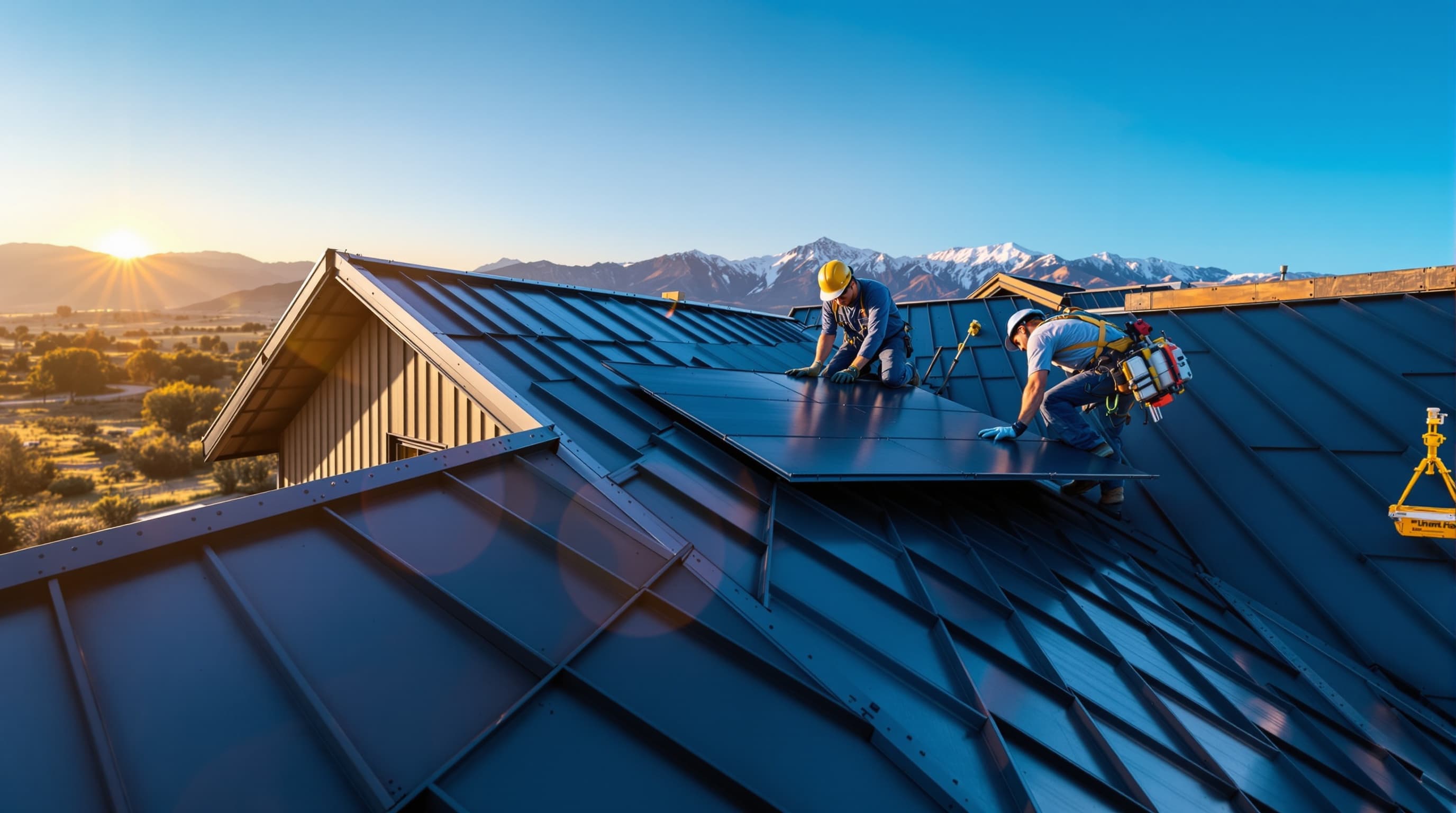
Standing seam works well under solar panels. Clamps can attach the racking to the raised seams without drilling through the roof. That means fewer holes and fewer places for a leak to start.
A metal roof can also outlast the panels on top of it. With shingles, the panels often have to come off for a new roof partway through their life. That removal and reinstall adds cost.
Is a metal roof louder in the rain?
Usually not by much. Standing seam goes over solid roof decking and underlayment. The attic and ceiling insulation below it soften the sound too.
The loud metal roofs people remember are often on barns and sheds with no decking at all. A metal roof on a finished home sounds far quieter than that.
Light or reflective finishes are worth asking about as well. They bounce back more summer sun than dark shingles, which can help keep the attic cooler.
Questions to ask before you buy
- Is the metal steel or aluminum, and what gauge is it?
- Are the panels formed on site or made in a shop?
- What impact rating do the panels carry?
- Where will the snow guards go?
- Does the warranty cover the finish, the panels and the labor?
- Who pulls the building permit, and is it in the price?
Standing seam metal roofing in Utah County
We install standing seam metal roofing across Utah County. If your current roof is near the end of its life, our roof replacement page explains the process. See our pages on roofing in Lehi and roofing in Provo for local details.
Call (801) 421-9681 to set up a free roof inspection.
Get Your Free Roof Estimate
No obligation. Same-week availability. We come to you.