Roof Repair in Utah County: Costs, Common Problems & When to Replace
By Ryan Christensen · May 29, 2026
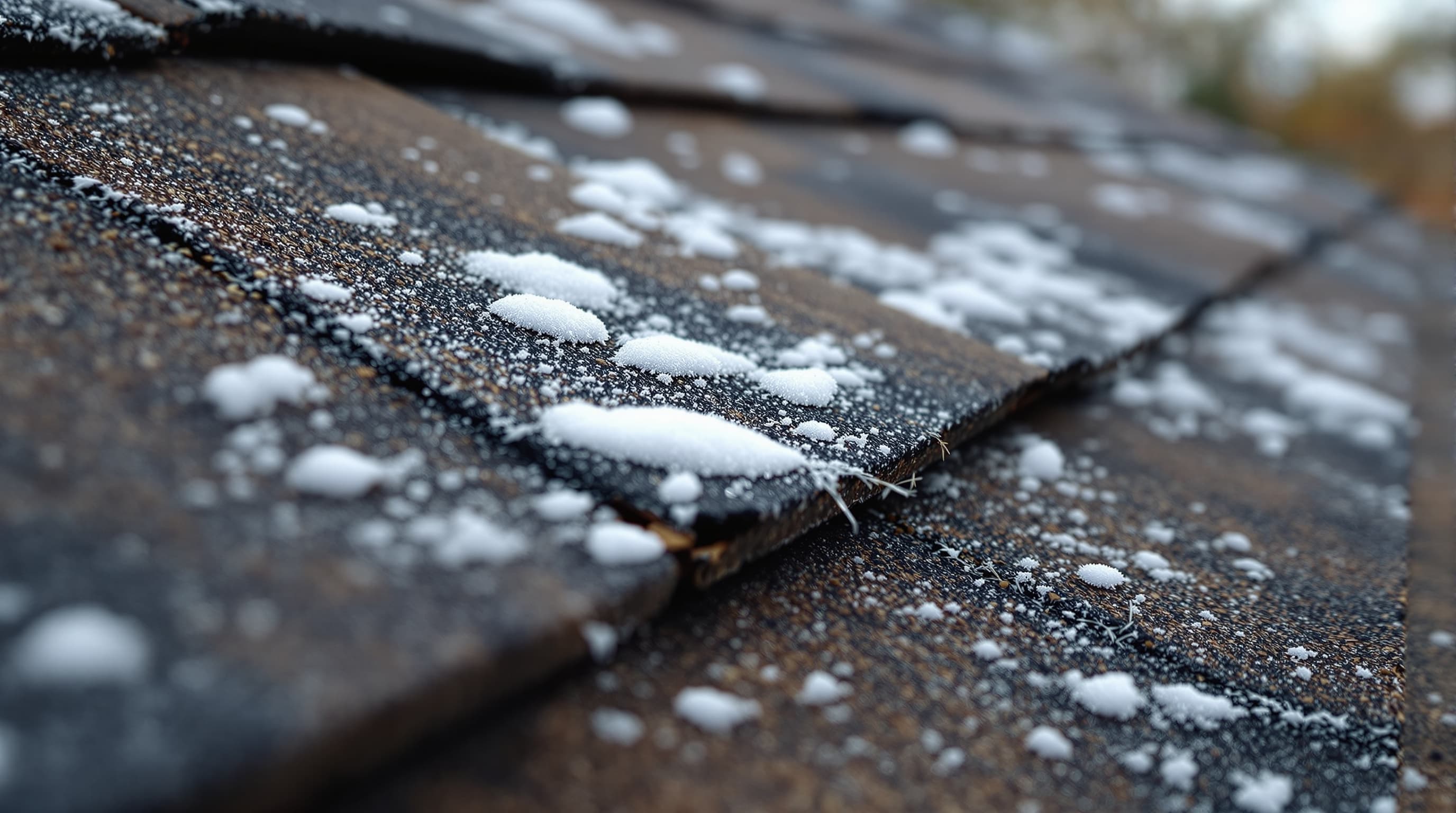
Roof repair in Utah County runs anywhere from $300 for a simple shingle patch to $6,000+ for major structural work. Understanding where your problem falls on that range — and whether repair even makes sense compared to replacement — starts with knowing what caused the damage in the first place.
Utah County has a specific set of roofing challenges that differ from lower-altitude Front Range markets. Elevation, hail frequency, high UV intensity, and freeze-thaw cycling through long spring and fall seasons all wear roofs differently than what national averages reflect. Here's what local homeowners actually deal with.
## THE MOST COMMON CAUSES OF ROOF DAMAGE IN UTAH COUNTY
HAIL DAMAGE: Utah County sits in one of the most hail-active corridors in the western United States. The Wasatch Front sees measurable hail events most years, and the size matters more than the frequency. Quarter-size hail (1 inch) causes cosmetic granule loss. Golf ball-size hail (1.75 inches) causes functional damage — exposed mat, cracked shingles, dented metal components — that will lead to leaks within 1 to 3 years if not addressed. Homes in Lehi, Eagle Mountain, and Saratoga Springs tend to catch hail earlier in the storm track than more southerly Provo and Spanish Fork.
WIND DAMAGE: Utah County sees sustained wind events, particularly in spring. The common failure pattern is lifted or missing ridge cap shingles and lifted starter strips at the eaves. Neither is cosmetically obvious from the ground, but both let water in. After any wind event over 50 mph, ridge cap and perimeter rows deserve inspection.
ICE DAMS: Higher-elevation areas of Utah County — Mapleton, Springville, parts of Highland and Alpine — experience more severe ice dam conditions than lower-elevation Provo and Orem. Ice dams form when heat escapes through the roof deck, melts snow, and water refreezes at the cold eaves. The water backs up under shingles and enters the structure. The fix for ice dams is ventilation and insulation, not necessarily a new roof. If your attic is under-insulated or has blocked soffit vents, you will have ice dam problems regardless of how new your shingles are.
HIGH-ALTITUDE UV DEGRADATION: Utah County sits at 4,500 to 5,000 feet. UV radiation intensity is meaningfully higher than sea-level installations. Asphalt shingles lose granules and oxidize faster at altitude than the manufacturer's warranty period assumes (most warranties are tested at lower elevations). A 30-year shingle on a south-facing slope in Highland may perform more like a 22-to-25-year shingle. Class 4 impact-resistant shingles, which use a modified asphalt compound, degrade more slowly in high-UV environments — worth the premium for elective replacements.
FREEZE-THAW CYCLING: Utah County's spring and fall seasons deliver repeated freeze-thaw cycles. Water enters small cracks in shingles, pipe boots, and flashing, freezes overnight, expands, and widens the gap. Each cycle increases the damage. This is why pre-winter roof inspections catch problems that weren't visible six months earlier.
## TYPICAL REPAIR COSTS IN UTAH COUNTY (2026)
SHINGLE PATCH (1-10 sq ft): $300–$800. Individual or small-area shingle replacement where the surrounding field is otherwise sound. Cost includes material, labor, and sealing. Common scenario: a few lifted shingles after a wind event, a single impact point from a falling branch.
SMALL TO MID-SIZE REPAIR (10-50 sq ft): $600–$1,800. Common for ice dam damage, isolated hail damage zones, or a failed valley section. At this scope we're replacing enough material that matching the original shingle matters — discontinued products can require more extensive replacement to avoid obvious patchwork.
MAJOR REPAIR (50+ sq ft): $1,500–$4,000. This is partial replacement territory. One full slope of a typical Ranch-style home is roughly 600–900 sq ft. A repair affecting more than a quarter of a single slope starts to look economically similar to a full replacement once you factor in material matching, labor mobilization, and the remaining life of the sections you're leaving in place.
PIPE BOOT AND PENETRATION REPLACEMENT: $150–$400 per penetration. Pipe boots (the rubber or neoprene collars around plumbing vents) are the most commonly failed small components on Utah County roofs. Freeze-thaw cycling cracks them within 7–12 years. One failed pipe boot causes a slow, insidious leak that shows up as interior staining months after the failure. Replace all boots proactively at or before the 10-year mark.
FLASHING REPAIR: $200–$900. Chimney flashing, step flashing at wall transitions, valley flashing. Properly installed flashing should last the life of the roof, but poor original installation or frost-cycle movement causes premature failure.
RIDGE CAP REPLACEMENT: $300–$1,000 for a typical single-family home. Ridge cap shingles take the highest wind and UV exposure on any roof. Granule loss, curling, and cracking happen here first. A full ridge cap replacement extends roof life by 5–8 years on a roof that's otherwise in reasonable condition.
## REPAIR VS. REPLACEMENT: THE DECISION FRAMEWORK
Repair makes more sense when: - The roof is under 15 years old (architectural shingles) - Damage is isolated to less than 20% of total roof area - The underlying deck is sound — no soft spots, delamination, or rot - Insurance is covering the repair cost (in which case scope is determined by the adjuster) - The rest of the field is in good condition — solid granule coverage, no curling, no cracking
Replacement makes more sense when: - The roof is over 20 years old (architectural shingles) or over 15 years old (3-tab) - Total repair area exceeds 30–40% of the roof — at that scope, full replacement is often within $1,000–$2,000 of the repair cost - Matching original shingles is impossible due to discontinued product - There is deck damage requiring replacement — adds $75–$125 per sheet of OSB - A storm insurance claim covers full replacement — don't leave replacement money on the table by accepting a repair scope
## PERMIT REQUIREMENTS IN UTAH COUNTY CITIES
Lehi, Provo, Orem, and Spanish Fork all require building permits for full roof replacements. Requirements for repair work vary by scope:
LEHI: Permit required for full replacement. Repairs under 25% of roof area often exempt, but check current threshold — it changes with code adoption cycles. Use Lehi City's online permit portal; processing typically takes 2–4 business days.
PROVO: Permit required for replacement. Re-roof permit (for layover) is less common now that International Residential Code limits layovers. Provo follows the IRC's 2-layer maximum.
OREM: Replacement permit required. No layovers on homes already carrying two layers. Orem Building requires photos of deck condition at rough-in inspection.
SPANISH FORK: Permits required for replacement. Spanish Fork historically has a faster permit processing time than Provo or Orem — often same-day for straightforward residential re-roofs submitted online.
## INSURANCE CLAIMS FOR STORM DAMAGE
If your damage was caused by hail or wind, file a claim before paying out of pocket. Utah County's storm frequency means a meaningful portion of roof repairs in this market are insurance-funded — and homeowners consistently leave money on the table by accepting a repair scope when replacement is covered.
Document the storm event. Record the storm date, photographs of gutters (dented gutters are strong adjuster corroboration), damaged A/C units or outdoor furniture, and vehicle hail marks if applicable.
Get a professional inspection before calling your carrier. An insurance-grade assessment with documented impact bruising measurements, granule loss photography, and written findings gives you credibility with the adjuster that a visual-from-the-ground check-in doesn't. We provide this free to Utah County homeowners.
When the adjuster visits, have your contractor present. Two sets of eyes catch more damage than one. Common items missed in initial scopes: starter strip replacement, drip edge replacement (required by current code on full replacement in most Utah County jurisdictions), ridge vent damage, and metal component replacement.
You have the right to choose your own contractor in Utah. Your insurer cannot require you to use their preferred vendor.
## TIMING CONSIDERATIONS
SPRING (APRIL–MAY): Best window for addressing freeze-thaw damage and pre-summer inspection before storm season peaks. Contractors are busy post-winter but not yet at peak summer backlog.
SUMMER (JUNE–AUGUST): Storm season peak. Hail damage from spring events gets addressed; insurance adjusters are backed up. Schedule promptly after any significant event — adjuster availability narrows in July and August.
FALL (SEPTEMBER–OCTOBER): Best window for pre-winter repairs. Any compromised flashing, failed pipe boots, or lifted ridge cap needs to be addressed before November freeze cycles begin. Lead time is 2–4 weeks for most contractors at this time of year.
WINTER: Emergency repairs are available but cold-temperature installation requires special adhesive protocols. Not ideal for planned work; surface temperatures below 40°F affect shingle sealant bonding.
If you're unsure whether your roof needs repair or replacement, a free inspection from a licensed Utah County roofer takes 30 minutes and answers the question with specifics rather than guesswork. Ask for a written findings report, not just a verbal assessment over the phone.
Ryan Christensen
Ryan has been roofing Utah County homes since 2003. He started Utah County Roofing Pros in 2011 after spending eight years learning the craft on Wasatch Front residential jobs. He grew up in Lehi, knows these neighborhoods, and built this company specifically for Utah County homeowners.
Get Your Free Roof Estimate
No obligation. Same-week availability. We come to you.